For the vast majority of people considering retirement, one question looms above all others: Have I saved enough to make the dream of retirement a reality? Tough question, given that it is impossible to predict how long we will live and what future costs we might incur (particularly with regard to health care). An article in U.S. News & World Report provided the following strategies for retirees to cut monthly expenses and make their life savings last longer. Pay off your mortgage Eliminating monthly mortgage payments is of the best ways to make retirement more affordable. While you will still have to pay taxes and maintenance costs on your home, these expenses are most likely a fraction of your mortgage payments. Downsize your home When your children have moved out and become independent, do you really need that house with several bedrooms in a community with good schools and large
Continue Reading... →Posts Tagged Elder Law
According to researchers at the Krembil Neuroscience Centre in Toronto, Canada, some forms of dementia are the result of many tiny, unnoticed strokes that damage the brain over time. The researchers believe that this type of dementia, once considered untreatable, could be managed with changes in lifestyle. The findings come from a study involving five individuals who had their brains scanned over the course of 16 weeks. The frequent scanning revealed minute spots on the MRIs characteristic of minor strokes. Such spots had not been in previous studies because the scans were conducted at longer intervals, in most cases just once per year. While researchers believe that the spots themselves do not cause symptoms, the lesions can become areas of white matter disease characteristic of dementia. Although approximately half of all elderly individuals have this white matter disease, in many cases it is harmless. For some, unfortunately, the disease can
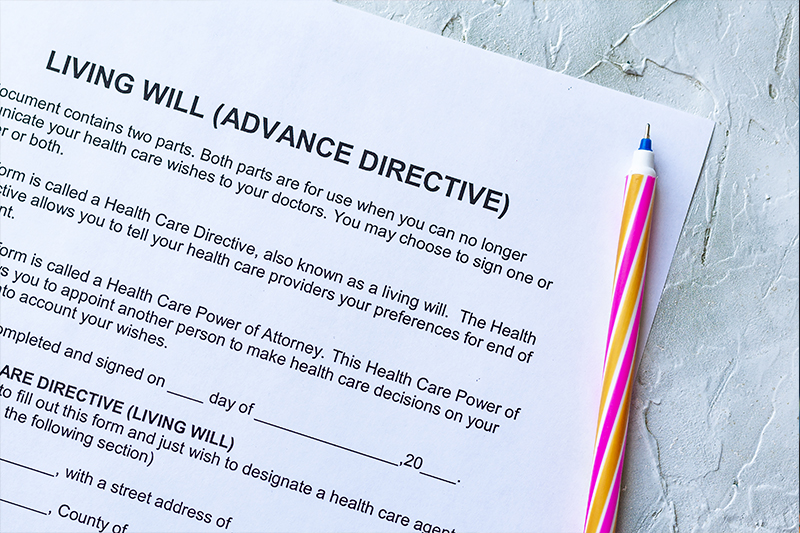
Continue Reading... →As an estate planning and elder law firm, we advise all of our clients about the importance of creating advance directives and keeping them up to date. However, it is equally important to let your love ones, physicians and financial advisors know that you have created these documents—and, where to find them. If your documents are stored on your computer, do your loved ones have the file name or password necessary to access them? If you’ve placed your planning documents in a safe, do your loved ones know the combination? If nobody can find your documents, they are about as valuable as the paper they are written on. In addition to making sure your loved ones can access your advance directives, you should consider telling them about your wishes directly, particularly the manner in which you want to be cared for in an end-of-life situation. We understand how difficult it
Continue Reading... →According to a two-year study, healthy eating, brain training, exercise and sound medical management may prevent age-related cognitive decline and, perhaps, dementia. The study sampled 1,260 people, aged 60-77, randomly assigning one group to receive some general health advice and another group to follow a special program. The advice and training given to participants in the special program included: Diet Eat plenty of fruit and vegetables, wholegrain cereals, low-fat milk and meat products. Participants were also told to eat less than 50 grams of sugar a day and have at least two portions of fish a week. Cognitive training Participants received computer brain training sessions and were advised to improve mental acuity by doing puzzles, reading and other activities requiring cognition. Exercise Participants were told to do strength training one to three times a week and aerobic exercise two to five times a week. The exercise advice was tailored to
Continue Reading... →In 2015, President Obama officially proclaimed November as National Family Caregivers Month. It is a time to recognize the selfless efforts of caregivers across the country and rededicate ourselves to making sure our caregivers have the support they need to maintain their own well-being and that of the people they love. Caregiver Action Network (CAN) is the nation’s leading family caregiver organization. It is working to improve the quality of life for the more than 90 million Americans who care for loved ones with chronic conditions, disabilities, disease, or the frailties of old age. If you are a caregiver, you can find an abundance of helpful information on CAN’s website, http://caregiveraction.org.
Continue Reading... →With Americans living longer than ever before, many of us will eventually require long-term care. It has been estimated that at least 70 percent of people over the age of 65 will need long-term care at some point in their lives. When most people think about long-term care, and who provides it, nursing homes and assisted living facilities come to mind. However, the vast majority of long-term care in the U.S. is provided by family members. In fact, eighty percent of those receiving care obtain the care they need at home, from children, siblings and other members of the family. A recent study by the AARP suggests that this system will be undermined in the future by demographic changes. Baby Boomers are now in their fifties and sixties, and many of them provide care for aging parents. Boomers in their 50s frequently take time off from work to care for
Continue Reading... →Alzheimer’s and other neurodegenerative diseases can make even basic tasks extraordinarily difficult. Designer Sha Yao saw this firsthand when her grandmother was diagnosed with Alzheimer’s disease. In response, she created Eatwell, a seven-piece tableware set. It features bright, primary colors, which Yao chose based on a Boston University study that showed individuals with cognitive impairment consumed 84 percent more liquid and 24 percent more food when they were served in brightly-colored containers. Other features of the tableware set include cups and bowls with angled bases. This allows contents to shift naturally to one side and make them easier to drink or scoop up. The accompanying spoons are ergonomically designed to correspond to the contours of the bowls. In addition, the tableware set has holes with flaps at the edge of the tray where a napkin, bib or apron can be tucked to prevent spills. The set’s drink-ware features wide bases, reducing
Continue Reading... →If you have made the difficult decision that nursing home care is the best option for your loved one, you must decide on the nursing home itself. Here are some of the issues to consider when choosing a nursing home. Location, location, location. This may seem obvious, but one of the most important aspects of an individual’s quality of life in a nursing home is receiving frequent visits from members of the family. When the nursing home is nearby, it’s easier for you and the rest of your family to visit. Similarly, if the nursing home is located relatively close to where your loved one lived previously, his or her former neighbors and friends will be more likely to visit. Special services. On the most basic level, if your loved has specific physical needs, the nursing home must be able to address them. And what about emotional or spiritual needs?
Continue Reading... →Losing one’s husband is difficult enough in and of itself. Unfortunately, many widows must also contend with the financial consequences of the loss of their husbands. According to government figures cited in a New York Times article, the household income for widows typically drops 37 percent after a spouse dies, far more than the 22 percent income decline experienced by men who lose their wives. The assets of widows also tend to fall substantially more than those of widowers. This is compounded by the fact that women typically live longer than men. Census figures indicate that one in four women from 65 to 74 are widows. By the age of 85, three out of four women are widows. To make matters worse, even couples with estate plans often fail to address the need for adequate income that will be faced by a surviving spouse. Talking about income, especially with regard
Continue Reading... →As an estate planning and elder law firm, we strive to provide all of our clients with the tools and strategies they need to prepare for whatever comes along, including wills, trusts, advanced directives, and more. While it is vitally important for you to have these documents, it is equally important to talk to your family about them. It is entirely possible that your children and other loved ones would like to know, for example, how you want to be cared for in the event of incapacity or an end of life situation. But do your loved ones know that you have made your wishes clear through advanced directives and the thinking behind the choices you made? Do they know that you have created a power of attorney that allows a person of your choosing to make medical and/or financial decisions on your behalf? Even if they understand that you
Continue Reading... →